Planet

Collective Resilience

For SHEIN, collaboration across our shared ecosystem is of paramount importance. It’s what enables us to meet the needs of the present without compromising our future.

We believe in investing in strategies that address climate change and build collective resilience across our operations and supply chains to ensure that we can future-proof our business and thrive in an increasingly dynamic environment.

Our Targets and Aspirations

Our efforts to reduce the environmental footprint of our products are guided by the following targets and aspirations:

  • Reduce absolute Scope 1 and 2 GHG emissions by 42% by 2030^.
  • Reduce absolute Scope 3 GHG emissions by 25% by 2030^.
  • Reach net-zero GHG emissions across the value chain by 2050.
  • Use electricity only from renewable sources for operations directly managed by SHEIN by 2030.
  • Source 100% forest-safe viscose* and paper-based packaging** for SHEIN-branded products by 2025.
  • Ensure all packaging sourced for SHEIN-branded products contains 50% preferred materials*** by 2030.
  • Transition 31% of the polyester used for SHEIN-branded products to recycled polyester by 2030.
  • Source 50% of SHEIN-branded products through our evoluSHEIN by Design initiative by 2030.

The Science Based Targets initiative (SBTi) has validated our net-zero science-based target by 2050 and approved our near and long-term science-based emissions reduction targets. SHEIN’s emissions reduction targets are from a 2023 base year.

“Scope 1” and “Scope 2” refer to emissions from SHEIN’s direct operations (including emissions from SHEIN-operated offices and warehouses, and emissions from our electricity purchases), while “Scope 3” refers to indirect emissions across SHEIN’s extended value chain, beyond our own operations (including emissions, which depend on our collaboration with our suppliers and other value chain partner).

We acknowledge that most of our emissions lie in Scope 3, and that we still have much work to do and are committed to driving progress, aligned to the company’s growth and expansion. In 2024, we partnered with sustainability consultant Anthesis Group to develop a decarbonisation roadmap to guide our progress toward meeting our near- and long-term emissions reduction targets

^ SHEIN’s emissions reduction targets are from a 2023 base year.

*SHEIN currently sources forest-safe viscose from producers awarded a ‘Green Shirt’ rating in Canopy’s Hot Button Report, indicating low risk of sourcing from Ancient and Endangered Forests (for more information on Ancient and Endangered Forests, please refer to Canopy’s Forest Mapper).

**SHEIN currently sources FSC-certified paper-based packaging for forest-safe paper-based packaging.

***Preferred materials used for packaging are recycled PE and paper packaging not sourced from Ancient and Endangered Forests.

Our strategic priorities for driving impact are to:

DECARBONISE OUR VALUE CHAINSOURCE RESPONSIBLE MATERIALSPROTECT NATURE AND BIODIVERSITY
SHEIN is committed to identifying and reducing GHG emissions throughout our operations and value chain activities.
Decarbonise our Value Chain

Our Science-based Emissions Reduction Targets

At SHEIN, we understand the role we have to play within our own operations and across our value chain in adapting to the impacts of climate change by supporting the transition to a low-carbon future. Addressing climate change will require systemic solutions and partnerships across multiple industries, bringing together governments, businesses, and local communities to transform how products are produced, transported, and consumed. We recognise that progress towards our net-zero ambitions will be a complex and long-term journey, one that will require significant time, resources, and close collaboration.

SHEIN is committed to reducing emissions across our value chain and has approved near and long-term science-based emissions reduction targets with the Science Based Targets initiative (SBTi); in 2025, the SBTi has also verified our net-zero science-based target by 2050 [1]. These targets are in line with the Paris Agreement’s goal of limiting global temperature rise to 1.5°C above pre-industrial levels, and are with reference to a baseline year of 2023:

Near-term targets (2030):

  • Reduce absolute Scope 1 and Scope 2 emissions by 42% by 2030
  • Reduce absolute Scope 3 emissions[2] by 25% by 2030
  • Increase active annual sourcing of renewable electricity to 100% by 2030

Long-term targets (2050):

  • Reduce absolute Scope 1 and Scope 2 GHG emissions by 90% by 2050
  • Reduce absolute Scope 3 GHG emissions by 90% by 2050 [3]

Overall Net-Zero Target (2050)
• Reach net-zero[4] GHG emissions across our value chain by 2050

[1] Details of our targets can be found in the SBTi’s Target Dashboard, under Roadget Business Pte. Ltd. (owner of the SHEIN brand).
[2] In line with SBTi’s requirements, and in conformance with the GHG Protocol Corporate Value Chain (Scope 3) Accounting and Reporting Standard, the scope of the target includes Category 1 (Purchased Goods and Services), Category 3 (Fuel- and Energy-Related Activities), Category 4 (Upstream Transportation and Distribution), Category 5 (Waste Generated in Operations), and Category 12 (End-of-Life Treatment of Sold Products).
[3] In line with SBTi’s Corporate Net Zero Standard criteria, our long-term targets cover at least 90% of our total Scope 3 emissions.
[4] Per the SBTi Corporate Net-Zero Standard, corporate net-zero is defined as (1) Reducing scope 1, 2, and 3 emissions to zero or a residual level consistent with reaching net-zero emissions at the global or sector level in eligible 1.5°C-aligned pathways; and (2) Permanently neutralising any residual emissions at the net-zero target year and any GHG emissions released into the atmosphere thereafter.

------------------------------------------------------------------------------------------------------------------------------------------------------------------------------

Decarbonise our Supply Chain

Our Approach to Emissions Reduction

In 2024, with the support of Anthesis Group, we developed a decarbonisation roadmap to guide our progress towards our near- and long-term emissions reduction targets. Through this process, we identified priority decarbonisation actions, focusing on areas with potential for greater emissions reduction impact, and evaluated them based on their technical, operational, and financial feasibility.

This assessment considered SHEIN’s business activities and future growth plans, current and projected market availability of solutions, and the evolving landscape and impact of global and national decarbonisation commitments and regulations, among other factors.[5] Our priority actions aim to reduce:

  • Direct emissions within own operations, i.e. Scope 1 and 2 emissions from SHEIN-operated offices and warehouses, and emissions from our electricity purchases and
  • Indirect emissions across our entire value chain beyond our own operations, i.e. Scope 3 emissions, which depend on our collaboration with our suppliers and other value chain partners.

In line with the SBTi Corporate Net-Zero Standard[6] , SHEIN intends to neutralise any residual emissions that remain after achieving deep absolute emissions reductions across Scopes 1, 2, and 3 by the net-zero target year of 2050. For any residual emissions that cannot be eliminated by the net-zero target year, SHEIN may explore carbon removal solutions consistent with SBTi requirements. The scale and approach to any such neutralisation will be determined closer to that time, taking into account technological progress, market availability and updated SBTi guidance.

[5] The emissions reduction impact and feasibility analyses were conducted on a best-efforts basis using the information available at the time of the study and may require periodic updates to account for changes in technological advances, business priorities, legislation or other national decarbonisation commitments, and industry decarbonisation efforts.
[6]Under the SBTi Corporate Net-Zero Standard (V1.3), achieving net-zero requires deep absolute emissions reductions of at least 90% across Scopes 1, 2 and 3 by the net-zero target year, with only residual emissions thereafter eligible for neutralisation through carbon removals. Near-term targets (e.g., 2030) are defined separately and must be met through emissions reductions alone, without reliance on offsetting or removals.

------------------------------------------------------------------------------------------------------------------------------------------------------------------------------

Decarbonise our Supply Chain

Direct Emissions Within Our Own Operations

To reduce our Scope 1 and 2 emissions, we are focusing on the following priority actions:

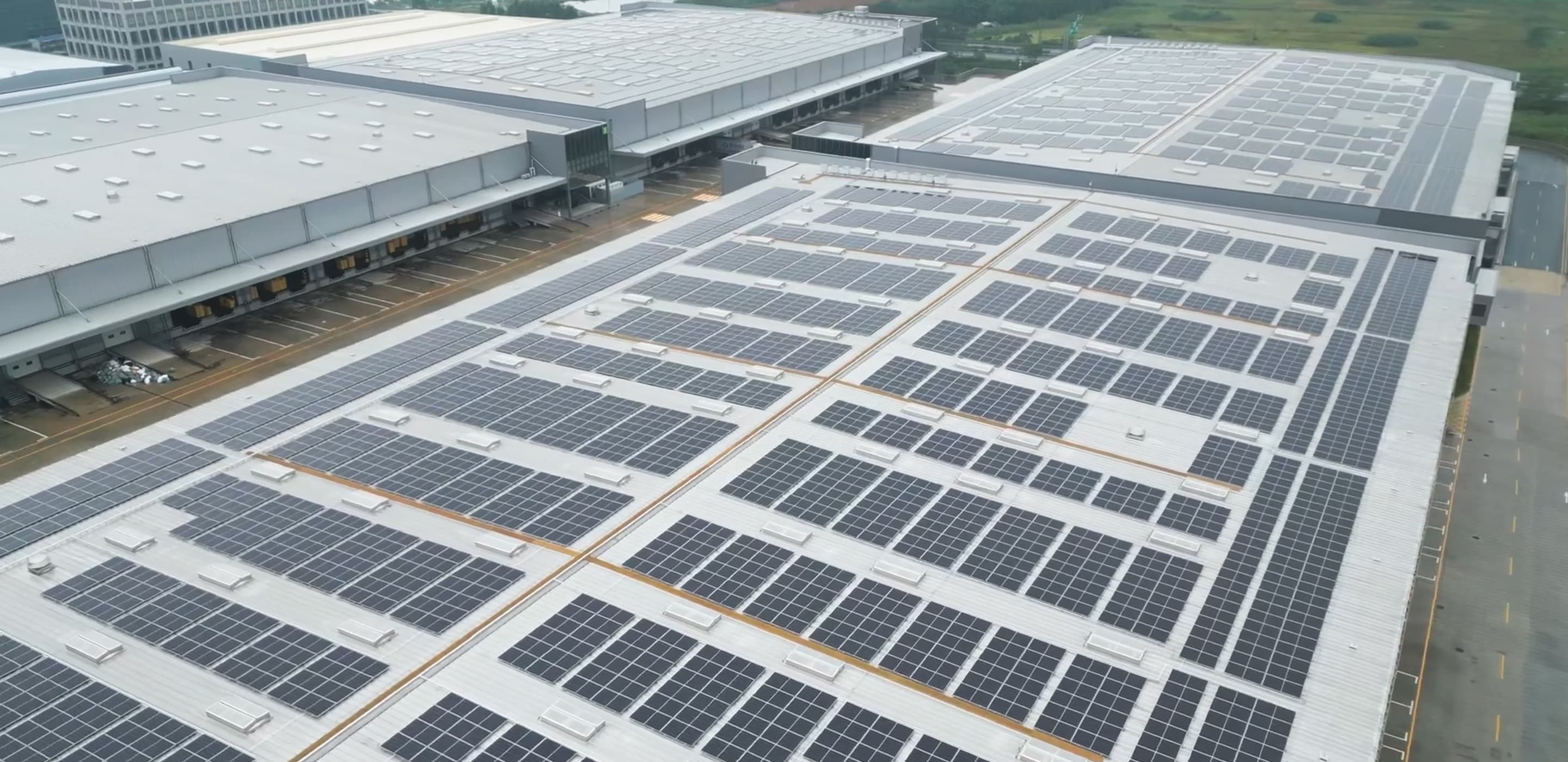
  • Transition to Renewable Energy Source: We are working to source 100% of the electricity used in operations directly managed by SHEIN from renewable sources by 2030. To do so, we will increase on-site electricity production through on-site solar photovoltaic (PV) installations at SHEIN-operated offices, warehouses, and other facilities, and the purchase of high-integrity Energy Attribute Certificates (EACs). Where we procure EACs, we ensure that renewable energy from the EACs obtained is generated in the same market boundary as the consuming facility.
  • Improve Energy Efficiency at SHEIN-Operated Sites: We will refine our energy consumption monitoring and implement measures to optimise energy consumption across SHEIN-managed facilities globally to improve energy efficiency and reduce consumption.
  • Phase out Fossil Fuels and Reduce Fugitive Emissions: We are taking steps to gradually eliminate the use of fossil fuels, such as natural gas, and fuel-powered vehicles and equipment in our own operations by transitioning to electric vehicles for owned business vehicles and equipment, such as forklifts. We also seek to reduce fugitive emissions, for instance, by switching to fire suppression systems with a lower global warming potential.

------------------------------------------------------------------------------------------------------------------------------------------------------------------------------

Decarbonise our Supply Chain

Indirect Emissions Across Our Entire Value Chain

SHEIN focuses our Scope 3 decarbonisation efforts in areas where we have the largest emissions, in particular Purchased Goods and Services (Category 1) and Upstream Transportation and Distribution (Category 4), which account for approximately 96% of emissions under our near-term targets in 2024.

Purchased Goods and Services (Category 1)

Across the life cycle of our products, the largest proportion of emissions can be attributed to the production phase i.e., during raw material production, fabric and garment production, and packaging production. Key actions to reduce this category of emissions are as follows:

  • Minimise the Use of Virgin Materials and Transition to Lower-Impact Alternatives: We are working to decrease emissions from product manufacturing by reducing the amount of virgin materials used in garment and packaging production and switching to alternatives with lower carbon footprints than conventional or status quo materials. We have also set the following near-term targets for our transition towards lower-impact materials, and will continue to review and update these as appropriate:
    1. Source 100% forest-safe viscose[7] and paper-based packaging[8] for SHEIN-branded products by 2025
    2. Ensure all packaging sourced for SHEIN-branded products contains 50% preferred materials[9] by 2030
    3. Transition 31% of the polyester used for SHEIN-branded products to recycled polyester by 2030
    4. Source 50% of SHEIN-branded products through our evoluSHEIN by Design initiative by 2030

In particular, scaling textile-to-textile recycling will be an important part of our circular transition – to this end, we had launched a multi-year research partnership with Donghua University, a university specialising in engineering and material sciences, to study how to drive commercially scalable production of recycled polyester fibres.

  • Promote Lower-Impact Manufacturing Processes: We believe our suppliers are critical to our decarbonisation journey in reducing our Scope 3 emissions. We focus on (1) encouraging our suppliers to transition to renewable energy, and (2) working with our suppliers to drive efficiency and to deploy lower-energy processes such as thermal digital printing to help reduce their carbon footprint.

Upstream Transportation and Distribution (Category 4)

Like many online retailers, a significant portion of our emissions can be attributed to the transportation and distribution of our products to customers. To reduce our transportation and distribution emissions, we will focus on the following actions:

  • Reduce Transportation Distances: This includes optimising our global logistics network and route planning to promote the greater use of land, sea, or multimodal routes, thereby reducing the need for air freight. In addition, we are working to produce, package, and ship closer to our customers, with the aim of lowering emissions, delivery times, and shipping costs.
  • Improve Transport Efficiency: This includes working with our logistics partners to transition to lower-emission transport alternatives, such as electric or hybrid vehicles and more fuel-efficient vehicles. In addition, we work to improve load and packaging efficiency, which maximises single-load capacity and reduces the number of loads required.

Other Areas of Decarbonisation

Beyond focusing on areas where most of our emissions lie, our decarbonisation roadmap also includes the following actions:

  • Waste Generated in Operations (Category 5): While emissions from waste generated in operations represent a smaller share of SHEIN’s overall Scope 3 footprint, reducing waste-related emissions supports both near-term efficiency gains and longer-term circularity objectives. SHEIN’s focus is on waste prevention and improved waste management practices across operations. We have updated our SHEIN Industrial Waste Management Guidelines[10], which apply to all sites under our direct management, including offices, distribution warehouses, and SHEIN’s Centre of Innovation for Garment Manufacturing (CIGM), to require closed-loop recycling of all industrial waste generated within these facilities, as well as the redirection of all non-recyclable waste towards energy recovery or non-hazardous treatment processes.
  • End-of-Life Treatment of Sold Products (Category 12): End-of-life emissions are influenced by consumer behaviour, product design and the availability of recycling infrastructure. SHEIN’s approach focuses on enabling longer product use and improving end-of-life outcomes, recognising the indirect nature of influence in this category.
    To encourage our customers to engage in circular behaviour, we have launched initiatives such as SHEIN Exchange, a peer-to-peer resale platform, and continue to promote customer engagement content to raise awareness about the importance of the circular transition.

Together, these priority actions form the core of SHEIN’s decarbonisation strategy and underpin progress toward its near-term and long-term science-based emissions reduction targets.

[7] SHEIN currently sources forest-safe viscose from producers awarded a ‘Green Shirt’ rating in Canopy’s Hot Button Report, indicating low risk of sourcing from Ancient and Endangered Forests (for more information on Ancient and Endangered Forests, please refer to Canopy’s Forest Mapper).
[8] SHEIN currently sources FSC-certified paper-based packaging for forest-safe paper-based packaging.
[9] Preferred materials used for packaging are recycled PE and paper packaging not sourced from Ancient and Endangered Forests.
[10] These guidelines require the classification, recycling, weighing, and record-keeping of all industrial waste, as well as the documentation of downstream recycling operations and the redirection of all non-recyclable waste towards energy recovery or non-hazardous treatment processes. In addition, the guidelines set out requirements and procedures for the treatment and management of industrial waste at each stage of the process.
Decarbonise our Supply Chain

Our Carbon Emissions

We report our emissions in accordance with the GHG Protocol Corporate Accounting and Reporting Standard. Our 2024 GHG emissions inventory (Scopes 1 to 3) were independently verified by Bureau Veritas, in accordance with ISO 14064-1:2018 and the GHG Protocol.

2024 GHG Emissions Inventory


Decarbonise our Supply Chain

Our Progress Towards Our Climate Targets

Scope 1 and 2 Emissions

Our Scope 1 and 2 emissions are mainly linked to electricity usage in SHEIN-operated offices, warehouses, and logistics centres. In 2024, SHEIN’s total electricity consumption across our globally managed operations was 243,340 MWh, which was a 47% increase from 165,206 MWh in 2023.

Our 2024 Progress

  • 76% of the electricity purchased for our own operations was derived from renewable sources, up from 72% in 2023. This includes 170,200 MWh from EACs. We also increased our on-site electricity production from solar energy, with 56.3 MW of capacity coming from solar photovoltaic installations installed or under installation across 10 of our facilities – a 29% increase in capacity compared to 2023. In 2024, we consumed 15,105 MWh of solar energy,corresponding to an estimated reduction of 8,106 metric tons of CO₂e.
  • We implemented energy efficiency measures across 23 SHEIN-operated facilities in China, that are estimated to reduce approximately 23,000 MWh of electricity use annually, corresponding to over 13,000 metric tons of CO₂e annually. The estimated CO₂e reduction for 2024 was 5,820 metric tons.
  • Since 2023, we have been progressively replacing traditional heptafluoropropane fire extinguishers with IG-541 or dry powder extinguishers, which have 99% lower emissions. In 2024, we replaced nine sets across nine facilities, corresponding to an estimated reduction of 2,656 metric tons of CO₂e.

Scope 3 Emissions

Analysis of our GHG emissions inventory shows that the majority of our emissions continue to occur beyond our direct operations, with nearly all of our carbon footprint attributed to Scope 3 emissions.

Our 2024 Progress

Category 1 – Making Our Products

  • We continued to promote the adoption of rooftop solar energy in our supply chain by connecting suppliers with third-party expert consultants who support the suppliers in developing custom solar PV installation plans, and by providing cash incentives to support installations. As of the end of 2024, approximately 114 MW of solar capacity was installed or under installation across 114 supplier sites. During the year, these supplier factories consumed 53,583 MWh of solar energy, resulting in an estimated reduction of 28,752 metric tons of CO₂e.42
  • We focused on identifying opportunities for fabric production factories to enhance resource efficiency. The implementation of such measures43, rolled out across eight fabric production factories, led to estimated annual savings of 10,870 MWh of electricity, 194,000 m³ of natural gas and 73,600 tonnes of steam, equivalent to an 8.1% reduction in carbon emissions or 36,000 metric tons of CO₂e annually.
  • We continued to promote and expand the adoption of energy-saving practices across our supplier network. Nearly 80 of our suppliers have adopted measures in line with our standardised energy efficiency guidelines, resulting in an estimated 2,302 MWh of electricity saved annually, corresponding to a reduction in carbon emissions of approximately 1,391 metric tons of CO₂e annually.

Category 4 – Transporting Our Products

  • By optimising air routes and switching to trucking for shorter routes, we were able to optimise air freight, and increase the use of sea freight and trucking. This shift resulted in an estimated reduction of approximately 502,273 metric tons of CO₂e.
  • We continued to expand the use of lower-emission transport alternatives, such as low-fuel-consumption vehicles, resulting in 14,151 metric tons of CO₂e saved.
  • To improve packaging efficiency, we reviewed the size, design, and materials used for transportation packaging during air freight, including switching paper boxes to recycled burlap bags, resulting in 143,924 metric tons of CO₂e saved.
  • We also worked with our logistics providers to eliminate the need for cardboard pallets in cargo loading for road transport, resulting in 7,826 metric tons of CO₂e saved.

More information about SHEIN’s carbon-reduction initiatives and our progress towards our SBTi targets is available in SHEIN’s 2024 Sustainability and Social Impact report.

Sourcing responsible materials involves selecting materials for our products that have a lower environmental impact, in terms of their carbon, water, land use, and chemical footprints, while also meeting performance and quality requirements.

Source Responsible Materials

SHEIN is a member of Textile Exchange, a global non-profit organisation driving beneficial impacts on climate and nature across the fashion, textile, and apparel industry. We use their guidance in implementing our preferred materials strategy, to select materials with improved environmental and/or social sustainability outcomes and impact. Our preferred materials strategy focuses on two key objectives:

Minimising the use of virgin materials

We seek to reduce our use of virgin materials by sourcing recycled alternatives with a lower environmental impact compared to conventional or status quo options, setting ourselves the following…

Conservation-friendly sourcing

We work to avoid sourcing materials from areas of high conservation value. As signatories of the CanopyStyle and Pack4Good initiatives led by Canopy, a non-profit organisation dedicated to protecting…

SHEIN’s Materials Portfolio

Sourcing responsible materials involves selecting materials for our products that have a lower environmental impact, in terms of their carbon, water, land use, and chemical footprints, while also meeting performance and quality requirements. We are dedicated to increasing our use of materials that fulfil these dual objectives within our materials portfolio.

Polyester

Polyester accounts for the majority of SHEIN’s fiber portfolio, making the transition to recycled polyester a significant aspect of our evoluSHEIN roadmap.

To meet our targets, we plan to transition…

Man-Made Cellulosic Fibres (MMCF)

As a CanopyStyle signatory, SHEIN is committed to ensuring that, by 2025, all directly sourced viscose used in SHEIN-branded products comes from producers that do not use wood from Ancient and…

Rescued Materials

The fashion industry has traditionally been known for overstocking and overproduction, resulting in large quantities of fabric, often referred to as deadstock, left unused in warehouses at the end of…

Packaging

We are committed to achieving our goal of ensuring that all packaging sourced for SHEIN-branded products contains at least 50% preferred materials, such as recycled PE for plastic packaging or paper not sourced from Ancient and Endangered Forests for paper packaging, by 2030.

Since 2022, we have focused on transitioning our express delivery bags and garment polybags for SHEIN-branded products to incorporate more recycled materials. In total, 50.1% of all express delivery bags for packages shipped by SHEIN in 2024 were made with at least 50% recycled polyethylene (PE).

We are also working to transition our plastic garment polybags to 100% GRS-certified recycled PE, progressively across SHEIN brands. We have also continued to find new ways to consume less plastic including optimizing the thickness and design of our express delivery and garment polybags, resulting in a decrease in average packaging weights. In line with the specific regulatory requirements of each country we operate in, SHEIN also ensures our packaging is properly labelled to help customers responsibly dispose of it. For example, all packaging bags are marked with the plastic type to support better waste separation. Overall, the proportion of packaging procured that contained at least 50% preferred materials increased to 17.0% in 2024 from 16.2% in 2023.

Our evoluSHEIN by Design Product Initiative

In 2022, SHEIN launched evoluSHEIN by Design, our product initiative which aims to introduce and promote greater awareness and adoption of aspects of our evoluSHEIN sustainability and social impact strategy within the SHEIN ecosystem. Products developed under this initiative form a portion of our overall collection. In 2024, around 8.3% of SHEIN-branded products made with textiles designated by SHEIN were produced in accordance with our evoluSHEIN standard.

Garments sold under this initiative must fulfil the following three criteria:

  • Consist of at least 30% preferred materials (refer to the “Preferred Material Sourcing” section below)
  • Be produced by suppliers who have achieved an above average rating on our SHEIN Responsible Sourcing (SRS) Audits.
  • Use packaging comprising at least 50% preferred materials*, such as recycled polyethylene.

While evoluSHEIN by Design is a SHEIN product initiative that aims to reduce certain environmental impacts relating to materials and packaging, it should be not interpreted as a claim that all products produced and sold as part of that initiative are sustainable.

*Preferred materials used for packaging are recycled polyethylene and FSC-labelled paper packaging.

We recognise that, beyond managing the impact of our own operations, we should also contribute to projects that preserve natural habitats and promote sustainable practices and ecosystems.

Protect Nature & Biodiversity

Our work across the Planet and Process pillars of our evoluSHEIN roadmap supports our ambition for the preservation of nature by avoiding and/or minimising our impact on biodiversity and natural ecosystems, and supporting industry transformation to reduce impacts and dependencies on nature.

Preventing potential negative impacts on nature and biodiversity

We seek to prevent potential negative impacts on nature and biodiversity in our direct operations and along our value chain through the following actions:

1.Ensuring that Areas of High Conservation…

Control of restricted substances

SHEIN has instituted a Manufacturing Restricted Substances List (MRSL), which controls the use of restricted chemicals throughout the garment manufacturing process. This helps to reduce the risk of…

Reducing our water footprint

In the fashion industry, water resources are consumed throughout the life cycle of a garment, from the cultivation of raw materials such as cotton, to the processing, dyeing, and treating of fabrics,…

Philanthropic Partnerships for Climate and Nature

Where we have direct impacts, we aim to support the restoration and regeneration of ecosystems by partnering with organizations that implement ecosystem restoration projects and protect biodiversity.…